


Sensory Bathtub Ideas: 6 Creative Play Worlds for Children Ages 3 and Up
Hello, I'm Julia, founder of Flowfull and a mother of two wonderful children. I know from personal experience how magical it is when children discover the world with all their senses. Children from the age of three are especially curious and eager to learn. This is precisely where sensory tubs come in: they are more than just a toy. They are small, self-contained worlds that invite exploration, feeling, and understanding.
Whether at home, in kindergarten, or in a therapist's office – a well-designed sensory tub promotes fine motor skills, concentration, and creativity in an incredibly playful way. Many parents and educators are looking for new ways to meaningfully engage children and support their holistic development. Sensory experiences are a fundamental building block for this, as they stimulate the connection of neural pathways in the brain and enable learning in a very intuitive way.
In this article, I'll share my favorite, tried-and-tested sensory bath ideas with you, which are not only easy to implement but also guaranteed to bring joy to children's eyes. We'll look at which materials are suitable, the educational value of each idea, and how to create a safe and stimulating play environment. Let's dive in together and create playful learning moments that will be remembered.
1. Water Worlds & Floating Treasures: The Classic Rediscovered
One of the simplest yet most effective sensory bath ideas is the absolute classic: a tub filled with water. This idea may sound simple, but its educational value is enormous and offers a fantastic foundation for countless play and learning opportunities. As a mother, I have repeatedly experienced how fascinating and calming playing with water can be. It's the perfect introduction to the world of sensory experiences, especially for children aged three and up.
The basic idea is to fill a tub with pleasantly warm water and add a selection of floating and sinking objects. The warm water has a relaxing effect on the nervous system and creates a calm, inviting atmosphere. Children can playfully explore basic physical laws such as buoyancy and density: Why does the cork float, but the glass marble sinks? Questions like these awaken a child's natural curiosity.
Educational value and practical implementation
The main focus is on promoting fine motor skills and hand-eye coordination . By scooping with cups, pouring with funnels, or deliberately "fishing" for objects with a small ladle, children train their motor skills almost without realizing it. These activities ideally prepare them for more complex tasks such as writing.
This method is used specifically in educational and therapeutic contexts:
- Montessori schools use water transfer exercises to promote children's concentration and independence.
- Occupational therapy practices use water tubs specifically for sensory integration to help children better process tactile stimuli.
- Kindergartens appreciate the calming effect for relaxed play phases and the reduction of tension, especially in larger groups.
The following infographic summarizes the key features and benefits of this versatile sensory bathtub idea.
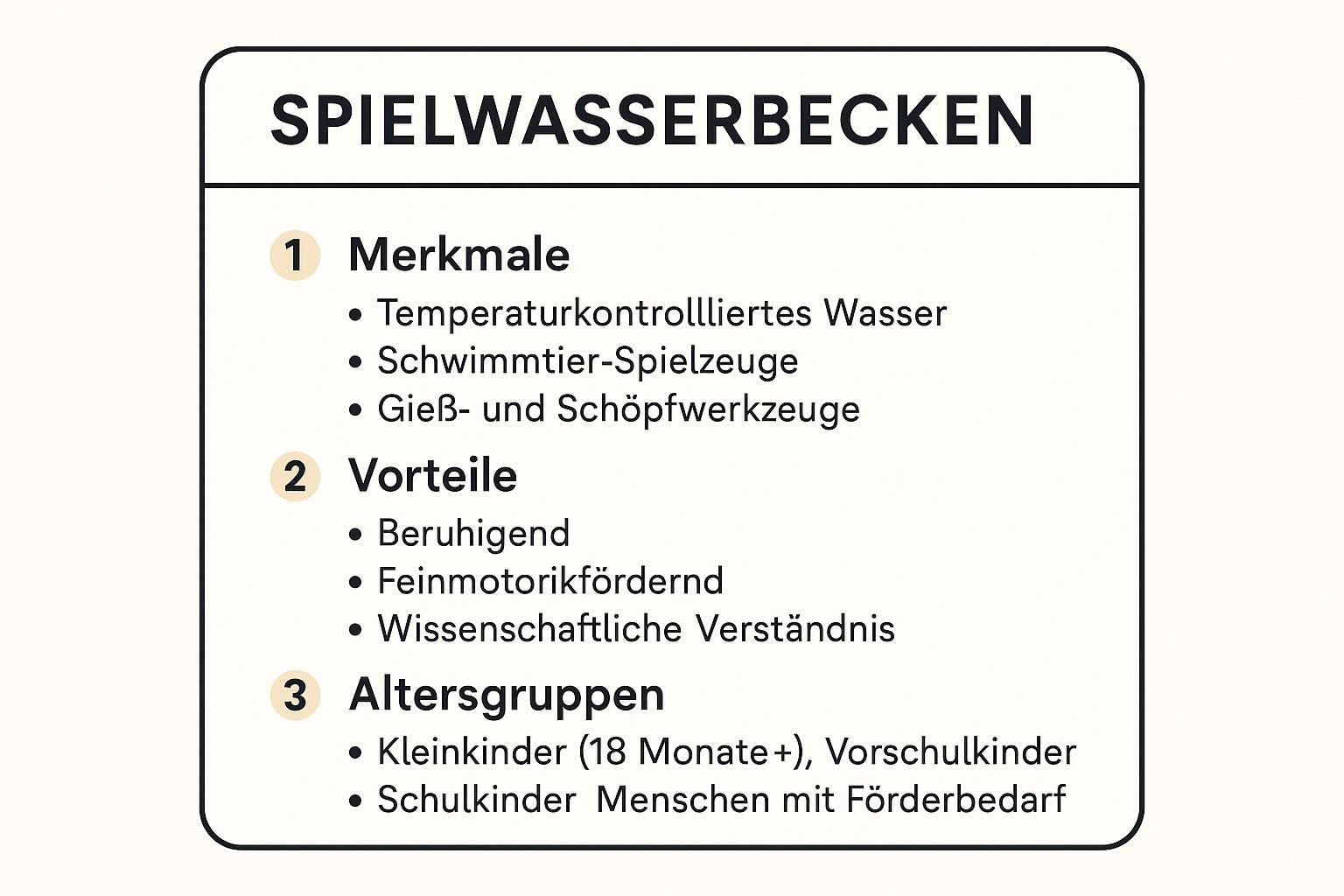
As the summary shows, this activity is not only calming and beneficial for fine motor skills, but also extremely adaptable for different age and developmental groups.
Tips for successful implementation
To make the experience safe and enriching, I have some tried and tested tips for you:
- Safety first: Always place a waterproof mat or large towels under the bathtub to prevent slipping.
- Create learning incentives: Add floating letters or numbers to playfully practice counting or the alphabet. A practical example: "Please fish out all the blue threes for me!"
- Basic mathematical experiences: Incorporate measuring cups, pipettes, and funnels. This allows children to playfully learn about volume and proportions.
- Regular hygiene: Change the water after each play session to prevent the formation of germs.
- Create themed worlds: Add blue food coloring for a sea world, a few leaves and sticks for a pond, or a few drops of child-friendly bubble bath for a foamy experience.
2. Colorful Rice & Bean Worlds: A Tactile Journey of Discovery
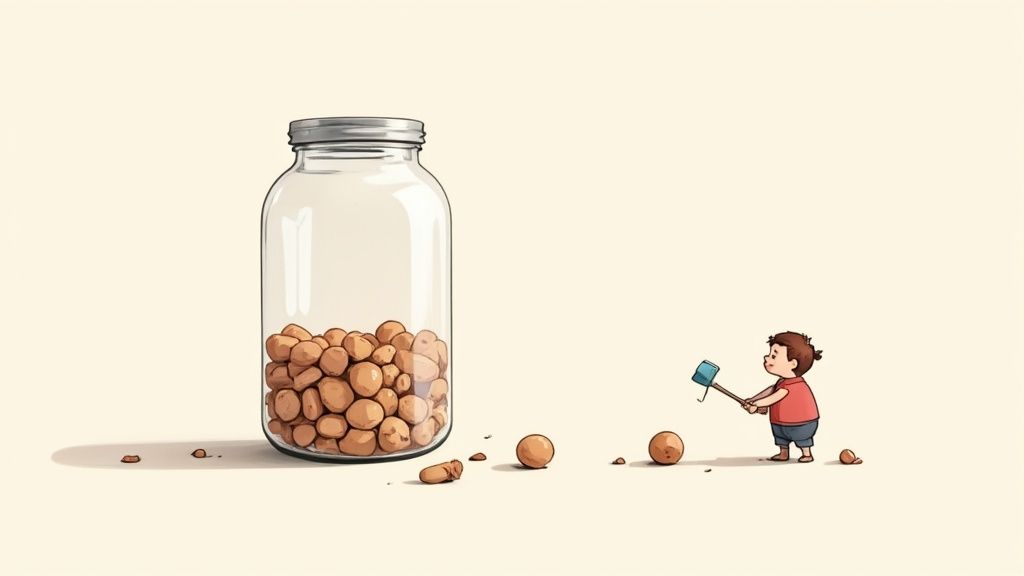
A wonderful alternative to playing with water, and one of my favorite dry sensory tub ideas, is a tub filled with rice, beans, lentils, or pasta. This idea is less prone to mess than water and yet offers an incredibly rich tactile experience for children aged three and up. As a mother, I know how valuable it is to offer a "clean" sensory activity that still provides deep stimulation and keeps children engaged for a long time.
The basic idea is to fill a tub with various dry materials such as uncolored rice, lentils, or large beans. The different textures, shapes, and sizes of the materials stimulate the nerve endings in the hands and fingers in a variety of ways. The sensation of digging the hands into the cool, dry rice creates a pleasant, deep pressure that can be particularly soothing for children with sensory processing difficulties.
Educational value and practical implementation
The focus of this activity is on promoting tactile perception and fine motor skills . Grasping, pouring, and sorting the small materials trains finger dexterity and hand-eye coordination in a very playful way. Children love burying small objects in the rice and finding them again, which simultaneously strengthens object permanence and concentration.
This method is widely used in educational and therapeutic settings:
- Daycare centers use rice tubs as a quiet activity that allows children to concentrate and play independently.
- Therapeutic facilities use them specifically for sensory regulation to help children better process tactile stimuli and find peace.
- Families at home , especially those supporting children on the autism spectrum, benefit from its calming yet stimulating effect.
The diverse materials provide an excellent foundation for learning different concepts. If you would like to learn more about the importance of sensory toys, you can find further information on sensory toys here.
Tips for successful implementation
To keep the game safe and exciting, here are a few tried-and-tested tips:
- Create visual appeal: Color the rice with food coloring. This not only makes the tub more visually appealing, but also allows for color-sorting games.
- Organize a treasure hunt: Hide small toy figures, letters, or shapes in the bathtub. A practical example: A construction site theme with chickpeas as "bricks," small excavators, and shovels.
- Provide suitable tools: Include various shovels, spoons, cups and tweezers to vary pouring and grasping and to specifically train fine motor skills.
- Supervision is crucial: Even with children aged three and older, constant supervision is important to ensure that no small parts get into their mouth, nose or ears.
- Practical storage: Store the dry materials in an airtight container. This way they stay clean and can be reused again and again.
3. Bubble bath & soap bubbles: A feast for the senses
A particularly fascinating and popular sensory bath idea transforms an ordinary tub or bathtub into a sea of foam and bubbles. This method combines hygiene with an intense sensory experience, making bath time a therapeutic and entertaining ritual. As a mother, I have often seen how a simple bubble bath can lift spirits and even delight children who are afraid of water. For children aged three and up, the tactile experience of soft foam and bursting bubbles is an unforgettable one.
The basic principle is to fill a bathtub with water and child-friendly, gentle bubble baths or special soap solutions. The resulting mound of foam offers a completely new texture to explore. Children can dig in it, create shapes, or hide and find toys. The combination of warm water and the light, airy feel of the foam intensely stimulates the sense of touch, while simultaneously having a calming and stress-reducing effect.
Educational value and practical implementation
The educational value of this sensory experience lies in promoting tactile perception and emotional regulation . The soft, pliable foam invites squishing and kneading, which strengthens hand muscles and develops fine motor skills. At the same time, the gentle feel on the skin helps children process sensory stimuli more effectively and can help them calm down.
This method is used specifically in various professional fields:
- Pediatric clinics use therapeutic baths to provide children with positive and relaxing experiences after medical procedures.
- Kindergartens use foam days as a special highlight to promote communal play in a cheerful atmosphere.
- Occupational therapists recommend bubble baths as part of sensory integration programs for home use to improve tactile tolerance and establish a positive routine.
The activity is not only pure pleasure, but also a valuable tool for promoting sensory processing and emotional well-being.
Tips for successful implementation
To ensure a safe and beneficial foaming experience, I would like to give you some proven tips:
- Skin-friendly products: Be sure to use tear-free and hypoallergenic bubble baths without harsh fragrances or dyes to avoid skin irritation.
- Start slowly: Begin with a small amount of foam, especially if a child is sensitive to new stimuli. The amount can be gradually increased.
- Integrating toys: A practical example is a "car wash" for toy cars or a "doll bathing station" with washcloths and sponges.
- Temperature control: Ensure that the water temperature remains consistently comfortable, as foam can cause the water to cool down faster.
- Establish a consistent routine: A regular bubble bath can become a calming ritual that structures the day and gives the child security.
4. Sand & Kinetic Sand: A world to grasp and shape
Another fascinating idea that keeps our children entertained for hours at home is a sensory tub filled with sand. Instead of water, we fill the tub with different types of sand, creating a tactile manipulation station that delights children aged three and up. This idea offers a completely different sensory experience than water and promotes proprioceptive and tactile perception in a unique way.
The basic idea is to fill a deep tub with different sand textures. We often combine classic, fine play sand with magical kinetic sand. This mixture invites digging, shaping, building, and feeling. Kinetic sand, which seems to hold together and flow on its own, is particularly fascinating for children aged three and up and is less prone to getting dirty than regular sand, making it ideal for indoor use.

Educational value and practical implementation
The focus of this activity is on promoting fine motor skills and creative expression . By shaping balls, building small castles, or digging with shovels, children strengthen their hand muscles and improve their motor skills. The feeling of the sand trickling through their fingers also has a strongly calming and grounding effect.
This method has proven successful in various educational fields:
- Kindergartens and playgroups often offer sand tables to encourage cooperative play and social interaction.
- Therapeutic practices use sandplay therapy to offer children a nonverbal way to express feelings and experiences.
- Support centers use sand trays specifically to improve tactile processing and proprioceptive stimulation.
For parents who want to delve deeper into the world of sensory play, this guide to sensory play at home offers valuable additional information.
Tips for successful implementation
To make your sand experience safe and varied, here are some tried-and-tested tips for you:
- Large, deep container: Use a tub with high sides to keep the sand contained as much as possible and minimize mess.
- Provide tools: Offer a selection of tools such as small shovels, molds, cups and rakes in various sizes.
- Mix textures slowly: Introduce different types of sand gradually so that your child can discover the different properties individually.
- Use a cover: Cover the tub when not in use to keep the sand clean.
- Integrating learning incentives: A practical example: Bury magnetic letters and give the child a "fishing rod" with a magnet to "fish" for the letters.
5. Fragrant Playdough Worlds: A Feast for Hands and Nose
Another fantastic sensory bath idea that engages multiple senses simultaneously is playing with scented playdough or clay. This activity combines the tactile experience of shapes and textures with olfactory stimuli, resulting in a particularly intense and memorable experience. As a mother, I know how much children love being creative with their hands. Add exciting scents, and you create a whole new level of play and learning, perfect for children aged three and up.
The basic idea is simple: Instead of regular playdough, homemade or store-bought playdough is used, enriched with child-safe scents such as lavender, lemon, or peppermint oil. The sensory tub serves as a defined play area, helping to contain the materials and providing the child with a clear framework for their creative work. Kneading, rolling, pressing, and shaping is not only a creative activity but also specifically trains the hand and finger muscles.
Educational value and practical implementation
The main advantage lies in the multisensory stimulation . The combination of touch (tactile), smell (olfactory), and the deep pressure sensation of kneading (proprioceptive) promotes sensory integration in a unique way. This type of play strengthens hand muscles and bilateral coordination as both hands work together to create something.
This method is used in various professional fields:
- Occupational therapy practices use scented modeling clay to strengthen hand strength and improve fine motor skills. Calming scents like lavender can also contribute to emotional regulation.
- Montessori institutions integrate this activity to promote independence and creative expression.
- Kindergartens offer kneading stations to train fine motor skills in preparation for holding a pen.
The sensory experience stimulates the imagination and can support language development when children describe the scents and their creations.
Tips for successful implementation
To ensure your playdough experience is safe and enriching, here are some tried and tested tips for you:
- Use fragrances safely: Use only high-quality, 100% pure essential oils and dose them very sparingly (one to two drops per ball of dough are sufficient).
- Add textures: Mix safe materials such as rice, lentils or small, smooth pebbles into the modeling clay to create additional tactile stimuli.
- Offer different levels of firmness: Produce modeling clay with varying degrees of hardness. Soft clay is easy to shape, while firmer clay requires more strength and provides a more intense muscle workout.
- To guarantee freshness: Homemade playdough should be refreshed regularly. Store it in airtight containers in the refrigerator to extend its shelf life.
- Creating thematic incentives: A practical example: Create a "pizzeria" with red (tomato scent), white (vanilla scent) and green (herb scent) playdough and let the children shape toppings.
6. Slime & Goo: A fascinating tactile experience
A particularly exciting and extremely popular sensory bath idea for children aged three and up is playing with gels and slime. These materials offer a unique tactile experience that is quite different from water or sand. As a mother, I've noticed that the stretchy, flowing, and sometimes sticky properties of slime exert an almost magical attraction and encourage children to engage in deeply focused play.
The basic idea is to fill the tub with a manageable amount of clear or colored gel, jelly, or child-safe slime. The viscous, pliable consistency provides proprioceptive input, a deep pressure stimulus that has a very calming effect on many children's nervous systems. Kneading, pulling, and shaping the material is not only fascinating but also strengthens the muscles in the hands and fingers.
Educational value and practical implementation
The focus here is clearly on sensory processing and stress reduction . Experiencing these unusual textures tactilely helps children process and integrate different stimuli. At the same time, manipulating the material promotes creativity and hand-eye coordination, for example, when small figures or beads are hidden and found in the slime.
This method is used in various professional fields:
- Science museums and workshops use slime labs to playfully introduce children to chemical processes.
- Occupational therapy practices use tactile materials such as gel and mucus to specifically support sensory processing in children with perceptual disorders.
- Kindergartens offer slime tubs as a special activity to encourage creativity and create a calming, focused play atmosphere.
The unique texture of slime and goo makes this activity an unforgettable experience that can both spark curiosity and promote relaxation. It's the perfect blend of science and play.
Tips for successful implementation
To ensure the slime adventure is a complete success, a few preparations are important:
- Controlled play area: Use the tub in an area that is easy to clean and place a washable mat underneath it.
- Preparation is everything: Have damp cloths, a bowl of water and towels ready to quickly clean sticky hands.
- Start small: Begin with a small amount of slime so that your child can gradually get used to the new texture without being overwhelmed.
- Active supervision: Especially with children aged three and older, always stay with them to ensure that nothing is put in their mouth.
- The right consistency: If you're making slime yourself, you can adjust the consistency with contact lens solution until it's comfortable for your child. You can also find many ideas in our guide to DIY sensory toys .
Comparison of the top 6 sensory bathtub ideas
| activity | 🔄 Implementation complexity | 💡 Resource requirements | 📊 Expected results | 💡 Ideal use cases | ⭐ Main advantages |
|---|---|---|---|---|---|
| Water and Floating Objects Sensory Bin | Materials (prepare water, supervision required) | Water, floating objects, containers | Promoting motor skills and scientific understanding | Montessori, occupational therapy, special needs | Calming, educational, for many age groups |
| Textured Rice and Beans Exploration Bin | Low (filling, coloring if necessary) | Rice, beans, lentils, containers | Fine motor skills, pressure sensitivity, minimal clutter | Daycare, therapeutic preschools, home | Minimal clutter, inexpensive, durable |
| Foam and Bubbles Sensory Bath Experience | Medium to high (preparing the bathroom, buying products) | Foam, bath additives, fragrance oils | Sensorimotor stimulation, calming | Clinics, special baths, home routine | Hygiene combined with sensor technology, versatile |
| Sand and Kinetic Sand Manipulation Station | Resources (sand, tools, cleaning) | Different types of sand, shapes, containers | Creativity, fine motor skills, proprioception | Museums, therapy, sensory gyms | Promotes creativity, versatile in its applications |
| Scented Playdough and Clay Exploration | Low to medium (manufacturing or purchasing) | Modeling clay, fragrances, color, ingredients | Hand strength, creativity, sensory integration | Art therapy, occupational therapy, schools | Multisensory, therapeutic, self-producible |
| Gel and Slime Sensory Experience | Resources (requires production, supervision needed) | Adhesives, contact solution, dyes, additives | Tactile and visual stimulation, resistance | Museums, therapies, DIY workshops | Uniquely tactile, visually appealing, calming |
Your toolbox for creative play: More than just a tub
You have now embarked on a journey through six fascinating worlds of sensory experience, from the flowing tranquility of water to the malleable magic of kinetic sand and fragrant play dough. This collection of sensory bath ideas is far more than just a list of activities. It's a building block for countless developmental and learning moments, tailor-made for your child aged three and up.
Each idea presented, whether exploring different grains of rice or diving into a mountain of foam, serves as a gateway to new experiences. You have seen how easy it is to foster complex skills with everyday materials. These activities are not just games; they are fundamental building blocks for cognitive, motor, and emotional development.
Key insights for your everyday life
The true magic lies not in perfect preparation, but in the conscious design of the playing environment. Let's summarize the key points once more:
- Safety and supervision are crucial: Constant supervision is essential, especially with small objects or materials like water. Create a safe environment where the child can explore freely.
- Personalization is key: Every child is unique. Observe closely which textures, sounds, or materials fascinate your child. Adapt the sensory bath ideas presented here to their individual preferences and developmental stage. Does your child dislike sticky hands? Start with dry materials like rice or sand.
- Less is often more: An overloaded tub can quickly become overwhelming. Start with basic materials and just a few tools. Gradually add new elements to keep the curiosity alive.
From knowledge to action: Your next steps
The best idea is the one that gets put into practice. Start small. Choose one of the presented ideas that you can implement with materials you already have at home. Perhaps you could start tomorrow with a simple tub of water and a few sponges and cups. The point is to establish a routine of discovery.
Remember: The goal isn't to create a perfect Instagram photo, but to create a space for genuine, undisturbed, and age-appropriate play. The most precious moments often arise when you simply observe your child and give them the freedom to develop their own ideas.
These targeted sensory experiences are a powerful investment in every child's future. They not only strengthen fine motor skills and hand-eye coordination, but also foster patience, concentration, and creative problem-solving. They give your child an invaluable resource: the ability to engage deeply with something and become completely absorbed in play. As a mother and founder, I know that these very moments of "flow" lay the foundation for a balanced and happy upbringing.
Are you ready to make the world of sensory play simple and safe? The Flowfull® Sensory Bathtub provides the perfect, stable, and child-friendly setting for all these creative adventures. Discover on Flowfull how our thoughtfully designed products can help you create precious play moments.

