


Bean Pit: Practical Play Ideas & Safety Tips for Children Ages 3 and Up
As a mom of two whirlwinds, I'm always on the lookout for simple play ideas that my children love and that also promote their development. A bean pit ? Sounds simple, and it is – but that's precisely where its magic lies. Imagine a simple box filled with countless beans. Perhaps unspectacular for us adults, but for children aged three and up, it's a veritable universe to explore.
It's far more than just a container for playing. It's a fantastic tool that also stimulates your children's fine motor skills, concentration, and creativity.
A treasure for little hands
The bean basin is my absolute favorite, a true passion project. It opens a door to a world full of sensory experiences and promotes development in an incredibly gentle and sustainable way. I see this every day with my own children, but also in kindergartens and therapeutic facilities we work with.
My aim here is not only to show you how to easily and safely build a bean trough yourself. Much more importantly, I want to convey to you what a powerful and valuable tool you will have at your disposal.
Imagine this: thousands of cool, smooth beans trickling through little children's hands. This sensation, combined with the soft, soothing sound, is an unforgettable experience. It grounds them, calms them, and helps them unwind after a hectic day at kindergarten.
Let's dive in together and discover why this simple idea is such a huge benefit for your child.
The bean basin at a glance
To give you a quick overview, I've summarized the most important points. These advantages are not only invaluable for you at home, but also in kindergartens or therapeutic facilities.
| aspect | Description | Why it's important |
|---|---|---|
| Sensory stimulation | Children feel the smooth texture, hear the trickling sound, and see the movement of the beans. | Stimulates the senses of touch, hearing and sight and promotes sensory processing. |
| Fine motor skills training | Grasping, pouring and sorting the beans specifically trains small hand muscles. | It forms the basis for important skills such as holding a pen or buttoning buttons. |
| Concentration & Calm | Focused play has a meditative effect and can extend the attention span. | It helps children to center themselves and better cope with everyday stress. |
As you can see, this simple game concept has a lot of potential. It's a wonderful way to playfully support important developmental steps.
Why a bean basin boosts your child's development
As a mother, I've learned one thing: the best toys are often the simplest. A bean pit is a perfect example. At first glance, it's just a box full of beans, but in reality, it's a fantastic sensory playground that has a lasting impact on our children's development – especially during the crucial age of three and up.
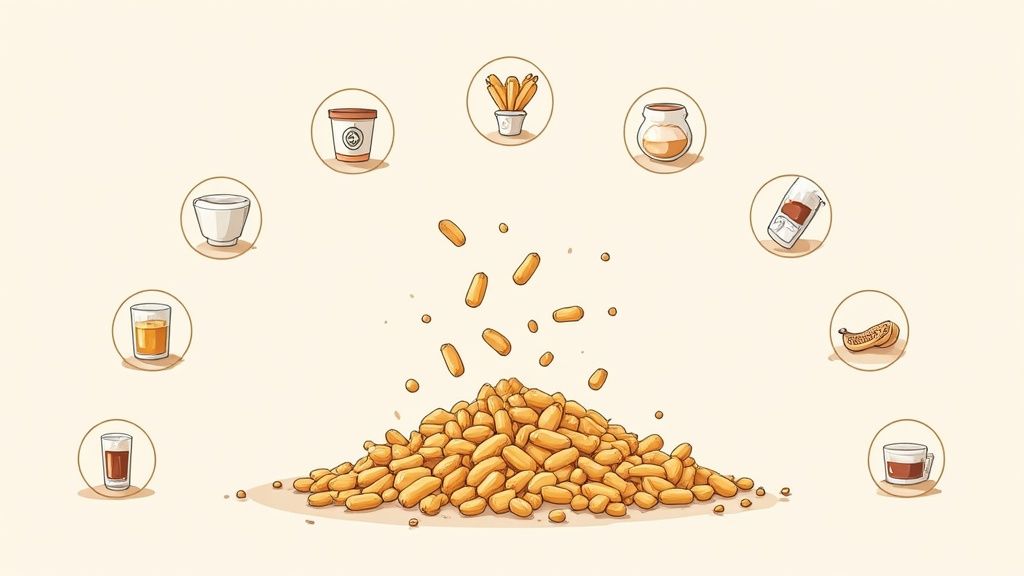
Imagine your child dipping their hands into thousands of cool, smooth beans. This touch alone is an incredibly intense experience for the sense of touch, the so-called tactile system. Compared to sand or water, the firm yet fluid structure of the beans feels completely different, creating a unique stimulus that specifically engages the senses.
Sharpening the senses in a targeted way
A bean basin is so much more than just a container for splashing and feeling. It's a holistic experience that addresses several areas of development at once.
- Sense of touch (tactile perception): Your child feels different levels of pressure and textures. The sensation of beans trickling through their little fingers is a wonderful exercise for processing stimuli and perceiving subtle differences.
- Hearing (Auditory Perception): Do you know the sound of beans being poured? It's a gentle, almost meditative pattering that has an incredibly calming effect. It helps children to focus and find peace.
- Vision (Visual Perception): Observing how the beans fall, flow, and spread out in the box promotes visual tracking and the ability to concentrate on one thing.
This interplay of the senses lays the foundation for more complex learning processes. If you'd like to delve deeper into how sensory toys support development , you'll find further fascinating insights in our magazine.
From coordination to concentration
Every time a little hand reaches for a single bean or fills a scoop , hand-eye coordination is trained almost without realizing it. This skill is the foundation for everything that comes later: writing, cutting, or tying a first bow. The great thing about the bean tub is that this training happens completely without pressure and purely through play.
At the same time, the concentrated pouring, sorting, or hiding of small treasures requires a great deal of attention. Educators and therapists have long known that this type of focused play demonstrably strengthens concentration skills.
A beanbag creates a small, low-stimulus world in which a child can fully immerse themselves in their activity. This ability to concentrate is an invaluable gift for later life.
Another thing that shouldn't be underestimated is the calming effect. After a hectic day at kindergarten, or if your child is simply restless, playing in the beanbag can be like a little wellness break. It helps children reduce stress, regulate their emotions, and reconnect with themselves – a safe haven in the often loud and fast-paced world of our little ones.
How to design a safe bean planter
As a mother of two little explorers, I know that safety always comes first, especially with play ideas so closely connected to nature. That's why I want to speak openly today about the most important aspect of the bean pond . A safe play environment is, after all, the foundation for your child to explore freely and without worry.
The absolute golden rule is: a beanbag is only intended for children aged three and older . By this age, most children have outgrown the oral phase and no longer reflexively put everything in their mouths. This age limit is truly crucial to minimize the risk of choking.
Choosing the right material
The foundation for safety lies in the materials you choose. Both the container and the beans themselves play a crucial role. The goal is to create a robust yet inviting play environment.
This graphic shows a selection of materials for the pool that have proven themselves in practice – both at home and in daycare centers.
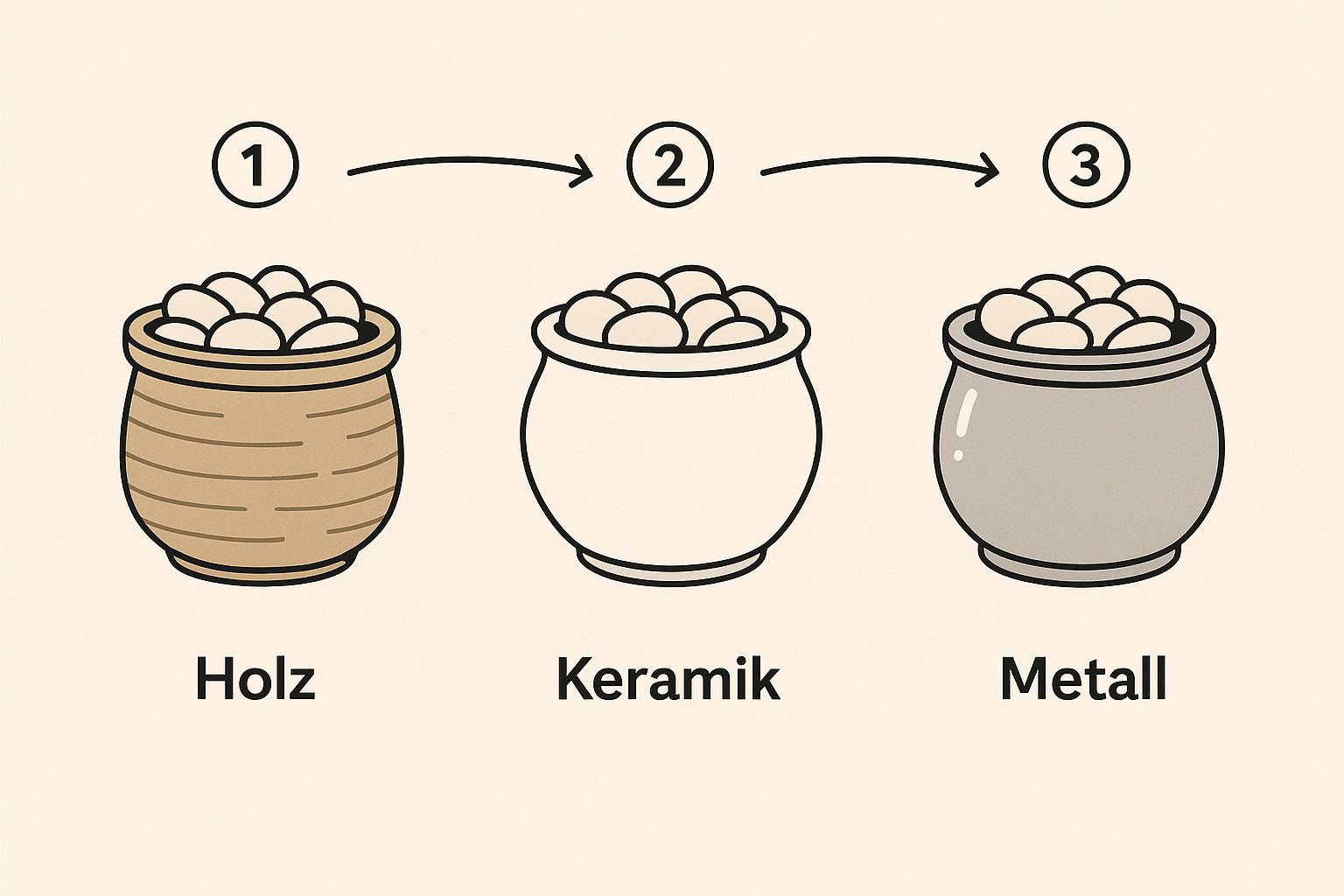
Each of these materials feels and sounds different when the beans are moved around inside – this greatly enriches the sensory experience. The most important thing is that the container is stable and secure.
A sturdy container made of wood or robust plastic with a flat bottom is ideal. It shouldn't tip over, even if your child leans against it. My tip from a mom's perspective: An old blanket or sheet placed under the container will catch any stray beans and make cleanup afterwards a breeze.
When it comes to the beans themselves, the simple formula is: the bigger, the better.
- Large bean varieties: Kidney beans, white giant beans, or lima beans are perfect. Their size makes them much less likely to be swallowed.
- Smooth surface: Make sure the beans are smooth and undamaged. This will prevent scratches on little hands.
- No small or pointed beans: lentils or rice are also great sensory materials, but we prefer to save them for older, more experienced children.
Clear rules and your constant supervision
Before the game starts, I always sit down with my children and we discuss some ground rules. It's not a strict act, but a small ritual that makes everyone feel secure.
Our most important rule is very simple: "The beans always stay in the box!" This way even the youngest children understand where the play area ends.
The most important rule, however, is for us adults: constant supervision . A bean pit is not a toy to be left alone with a child. Always stay nearby so you can intervene immediately if a bean does happen to wander towards their mouth.
With these simple yet crucial steps, you can create a safe and relaxed atmosphere. If you'd like to delve deeper into how to create safe sensory play experiences, take a look at our guide to sensory play at home . This way, the beanbag will become a place of pure joy and discovery.
Practical play ideas that children really love
A beanbag is essentially a blank canvas for countless adventures. As a mom, I've tried out quite a few things with my kids over the years and discovered some real favorites. Here I share my tried-and-tested ideas – games that bring joy not only at home, but also in daycare centers and therapy practices.
It all starts with free exploration. Simply give your child the basin to begin with and let them explore the beans with their hands. Observe how they feel the smooth, cool texture and listen to the gentle trickling sound. This alone is an incredibly valuable sensory experience.
Simple pouring and filling exercises
Once your child is familiar with the material, you can introduce very simple tools. This is the perfect next step to specifically train fine motor skills and hand-eye coordination.
- Practical example "Kitchen Helpers": Provide different spoon sizes, from teaspoons to soup ladles, and a few unbreakable cups. Your child can now scoop and transfer beans, playfully learning to control their movements.
- Practical example “Message in a bottle”: The targeted filling of a bottle with a narrow opening using a funnel is a great challenge that requires a lot of concentration.
- Practical example "Sandbox with a twist": Small shovels and buckets, familiar from the playground, take on a new function here. The child quickly realizes: Beans behave quite differently than sand.
Such basic activities not only train motor skills, but also incidentally impart a first sense of quantities and volume.
Imaginative role-playing games
Once the basics are mastered, the beanbag opens the door to a world of imagination. Here, children can slip into countless roles and unleash their creativity. This not only fosters imagination but also important social skills when they play together.
A bean pit is like a small theatre stage where the children themselves direct. They create worlds, tell stories and playfully process their everyday experiences.
- Practical example “construction site”: Using toy excavators, trucks and small construction worker figures, the beans are turned into gravel that needs to be transported from A to B.
- Practical example “Animal feeding”: Add a few Schleich animals. The children can build feeding troughs, feed the animals, and make them a cozy bed out of beans.
- Practical example “doll’s kitchen”: Transform the sink into a play kitchen where a delicious “bean soup” is cooked and distributed in small bowls to all the dolls and teddy bears.
There are truly no limits to the imagination!
Educational games for older kindergarten children (4-5 years)
For older children, the bean pit can also become a small learning space. Hide colorful wooden letters or numbers among the beans and let your child go on an exciting treasure hunt .
- Sorting games: Set out several small bowls and give a clear task: "Find all the red pebbles!" or "Collect 5 large buttons!" This trains color recognition and basic counting skills.
- Counting exercises: "How many beans will fit on this spoon?" Such simple questions promote initial mathematical understanding in a totally playful way.
Incidentally, the term "Bohnenbecken" (bean basin) has a completely different meaning. It traditionally refers to agricultural areas in Germany that are particularly well-suited for bean cultivation thanks to their soil and climate.
Many of these ideas can be wonderfully adapted and expanded. If you're looking for even more inspiration on how to make your own sensory toys , you'll find further creative instructions in our magazine. In the end, only one thing matters: Fun should always be the priority!
Care and storage for long-lasting fun
To keep the bean pond a clean and inviting play area, it needs a little maintenance. But don't worry, it's quick and easy. With a few simple steps, you can ensure the beans remain hygienic and the children can enjoy uninterrupted sensory fun.
I'll show you how to gently clean the beans, quickly identify damaged ones, and store everything safely and in a space-saving way.
Here's how to gently clean the beans.
Before you start washing, it's best to take a close look at the beans first. A quick visual inspection will tell you a lot. Look for beans that have cracks, discoloration, or strange stains – you should discard these immediately.
For everything else, a very gentle cleaning is sufficient:
- Place the beans in a sieve and briefly rinse them in lukewarm water. This will wash away any dust and small crumbs.
- Rub them gently with your hands.
- Next, spread the beans out on a clean cloth and let them air dry completely. This is very important!
Only when the beans are completely dry again can they be returned to the tank. This prevents mold growth and unpleasant odors.
Proper storage
When the bean tub isn't in use, it should be stored properly. A suitable container with a lid is invaluable here. It not only protects against dust but also keeps out curious pets or small insects. Stackable boxes are the most practical, as they can simply be tucked away in a corner or on a shelf when not in use.
An airtight lid is ideal for keeping the beans fresh and safe. Store the box in a cool, dry place. Prolonged exposure to direct sunlight is not good for the beans.
Did you know? Historically, dried beans were more than just a toy in Germany. Their long shelf life and high nutritional value made them an important source of protein, especially in economically tight times like the post-war period. You can learn more about life in rural regions back then in this publication from bpb.de.
Small skincare routines for a big impact
With a simple routine, your bean pond will remain a great play area for months and years.
- Check: Look through the beans approximately every 6 months and sort out any damaged ones.
- Replacement: Depending on usage, the beans should be completely replaced every 1-2 years .
- Disposal: The old beans don't have to go in the trash!
Dispose of and reuse in an environmentally friendly way
Regularly replacing the beans ensures optimal hygiene. The great thing is: old beans can be reused in a wonderfully environmentally friendly way.
- Compost: Beans are a great addition to compost and return valuable nutrients to the soil.
- Garden: They can also be very useful as a mulch layer on flower beds.
- Recycling center: If neither of those options is possible, they can also be disposed of via the recycling center.
This way you close the cycle and avoid unnecessary waste. A well-maintained and robust bean pond will bring you and your children joy for a long time.
Frequently asked questions about the bean basin
As a mother, and in constant contact with educators and therapists, I've noticed that certain questions about the beanbag chair come up again and again. I think that's wonderful, because it shows how much your child's safety and well-being are important to you. To clear up any remaining uncertainties, I've compiled the most important answers for you here.
These answers should help you create a play environment that is not only safe but also perfectly suited to your child's development and needs.
At what age is a beanbag truly safe?
The clear recommendation, also given by experts, is: from age 3. But this number is only a guideline. What's much more important is where your child is in their personal development.
Observe your child closely: Do they still frequently put things in their mouth, nose, or ears? Only when this phase is truly over is it time for a beanbag. And of course, loving and attentive supervision by an adult is always the most important safety rule.
Can lentils or rice be used instead?
Yes, absolutely! Materials like lentils, rice, or even chickpeas offer a wonderful change of pace and provide entirely new sensory experiences, especially for children who are already a bit more experienced. Rice, for example, trickles very finely through the fingers and sounds completely different, while lentils feel faster and have a different texture.
For beginners, large, smooth beans (like kidney beans) are the best and safest choice. The risk of swallowing them is lowest, and small children's hands can grasp them much more easily. Simply adjust your rules and supervision to the material: the smaller the pieces, the closer you should be.
What should I do if my child throws out the beans?
Don't worry, this is perfectly normal at the beginning and part of the discovery process. Children are testing boundaries and the properties of the material in this way. The key is how you react – ideally with patience and clear, loving instructions.
Formulate a simple, positive rule. Instead of a sharp "No!", a "The beans stay in the box, because this is their home" often works wonders.
My practical mom tip: Put a blanket or an old sheet under the bean tub right from the start. This not only makes tidying up easier for you, but you can also involve your child directly. Collecting the beans together then simply becomes part of the game. You'll see, the throwing usually stops all by itself as soon as your child realizes how fascinating pouring, feeling, and sorting in the tub is.
At Flowfull, we believe in the power of simple, sensory play. A beanbag is a fantastic way to explore the world with all the senses. If you're looking for more thoughtful and safe play ideas that grow with your child, please check out our products at https://flowfull.de .

